A relocation in Cambridge can look simple on a map.
Your new apartment may be only a mile or two away. You may be going from Cambridge to Boston, from Boston to Cambridge, or just a few streets from your current home.
But anyone who has actually relocated within this city knows that distance isn’t always what determines how easy—or how expensive—the day will be.
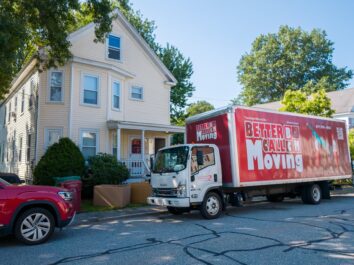
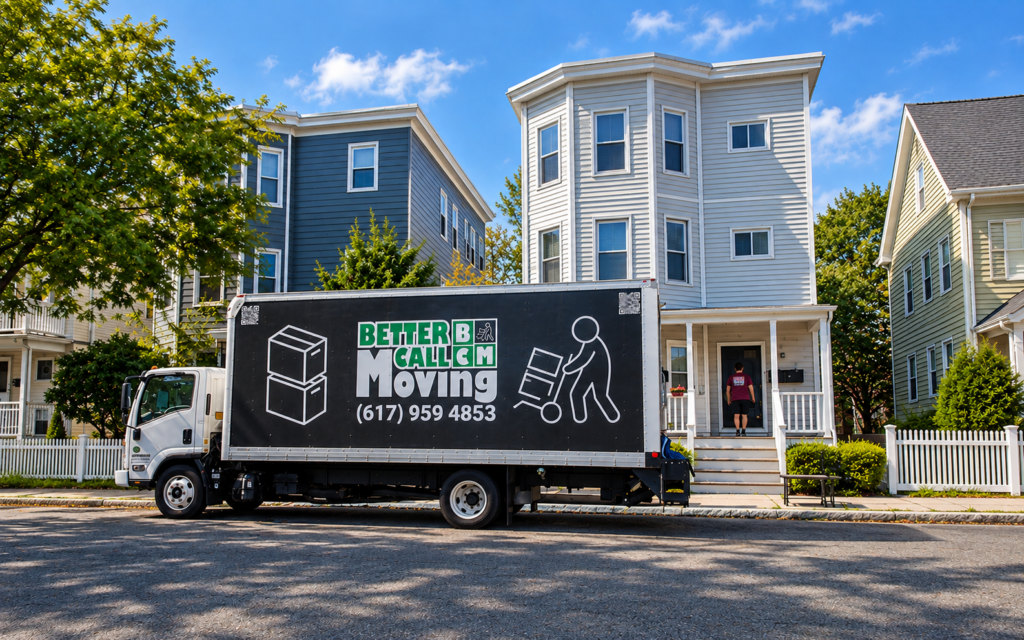
Sometimes, where the truck can park matters more than how far you’re going.
At Better Call Moving Inc., this is one of the first things we want customers to think about when planning a Cambridge move.
Why?
Because your crew shouldn’t spend valuable time carrying furniture half a block simply because nobody planned where the truck would go.
Good planning before the big day can save time, reduce unnecessary labor, protect your belongings, and make the entire process considerably easier.
Key Takeaways
| Takeaway | Details |
|---|---|
| Start with parking | Where the truck parks can matter more than how far you’re going. |
| Moving Van Permit | Reserves curb space for up to three consecutive days; apply at least 7 calendar days ahead. |
| Short carry = efficient hours | A truck at the door saves crew time on every box and every piece of furniture. |
| Truck routes matter | Cambridge regulates truck traffic on some streets, so the route needs planning too. |
| Check both addresses | Parking, elevators, and COI rules matter at pickup and at delivery. |
Relocating in Cambridge? Start With Parking
If you’re planning to relocate into, out of, or within the city, parking should be part of the conversation from the beginning.
Cambridge has a limited supply of street parking, and demand for available spaces is high. The City operates resident-permit areas, metered spaces, municipal parking facilities, loading areas, and other regulated parking.
Most importantly for anyone planning a relocation, the City of Cambridge offers a Moving Van Permit that allows curb space to be reserved for a vehicle used to carry belongings into or out of a building.
That can make an enormous difference on the day itself.
Imagine two identical jobs.
At the first property, the truck is parked directly in front of the building.
At the second property, the crew has to park down the street and carry every box, chair, table, mattress, and piece of furniture a significant distance to the truck.
| Factor | Truck at the door | Truck down the street |
|---|---|---|
| Carry per trip | A few steps to the ramp | Half a block or more |
| Time per item | Short and predictable | Multiplied by every box and piece of furniture |
| Exposure to weather | Minimal | Longer time outside |
| Sidewalk traffic | Short crossing | Long walk past pedestrians and cyclists |
The apartment, the amount of furniture, and the crew are all the same, yet the job is completely different.
The second one can take considerably longer simply because of the distance between the building and the truck.
And when you’re paying professionals by the hour, time matters.
That’s why one of our strongest recommendations is simple:
Plan the truck parking before the big day.

A Moving Van Permit Can Be Worth the Preparation
Cambridge specifically provides Moving Van Permits for residents who need to reserve curb space while bringing goods into or out of a building.
According to the City, these permits can be issued for a maximum of three consecutive days, and applications should be submitted at least seven calendar days in advance. Details and the application are on the City’s Moving Van Permit page.
| Cambridge Moving Van Permit | What the City says |
|---|---|
| Purpose | Reserves curb space for a vehicle moving goods into or out of a building |
| Maximum length | Up to three consecutive days |
| When to apply | At least 7 calendar days before the date |
| Overnight parking | Allowed when the space is reserved for two consecutive days |
| Signs | Posted by City staff after the permit is approved and paid for |
| Fees | Charged per vehicle, per day; metered spaces cost extra — confirm current fees with the City |
This isn’t just another piece of paperwork.
It can be part of controlling the logistics—and potentially the cost—of your relocation.
If suitable curb space can be legally reserved close to the entrance, your crew may have a much shorter carry between the truck and your home.
That means:
- fewer unnecessary steps;
- less time carrying furniture along the sidewalk;
- reduced exposure of your belongings to rain, snow, or other weather;
- fewer encounters with pedestrian traffic;
- and, most importantly, a more organized process.
If you’re planning a Cambridge relocation, check the City’s current requirements early rather than waiting until the night before.
Parking rules, eligibility, available locations, and permit requirements can change, so current information should always be confirmed directly with the City of Cambridge.
Pro Tip: Apply for the permit as soon as your date is fixed. With a seven-day minimum, a move booked on Monday for the following weekend is already too late for a Cambridge permit.
The Cheapest Moving Rate Won’t Help If Your Truck Is Parked Far Away
People naturally compare hourly rates when searching for Cambridge movers.
That’s reasonable.
But the hourly rate is only one part of what determines your final cost.
Let’s say one company charges slightly less per hour.
If its crew has to park far from your building and spend the day making long carries back and forth, that lower hourly rate may not create the savings you expected.
Now imagine another job where parking was arranged ahead of time and the truck is positioned close to the building entrance.
The crew can load efficiently.
Furniture travels a shorter distance.
The team spends more of its time actually carrying your belongings rather than walking back and forth along the street.
| Illustrative comparison | Lower rate, no parking plan | Higher rate, parking planned |
|---|---|---|
| Hourly rate | Lower | Slightly higher |
| Truck position | Wherever a space is free | Reserved curb space near the entrance |
| Carry distance | Long | Short |
| Billable hours | More | Fewer |
| Final bill | Can end up higher | Can end up lower |
This is why we believe customers should think about efficiency, not just price per hour.
The question isn’t only:
“How much do you charge per hour?”
A better question is:
“What can we do in advance to make those hours as efficient as possible?”
In this city, parking is often part of that answer. Licensed Massachusetts movers must also charge the rates they file with the state, and you can confirm a company on the list of DPU-regulated moving companies.
Cambridge Is Not a City Where You Want an Inexperienced Truck Driver
There is another side of the job that customers may not see: getting the truck to the building.
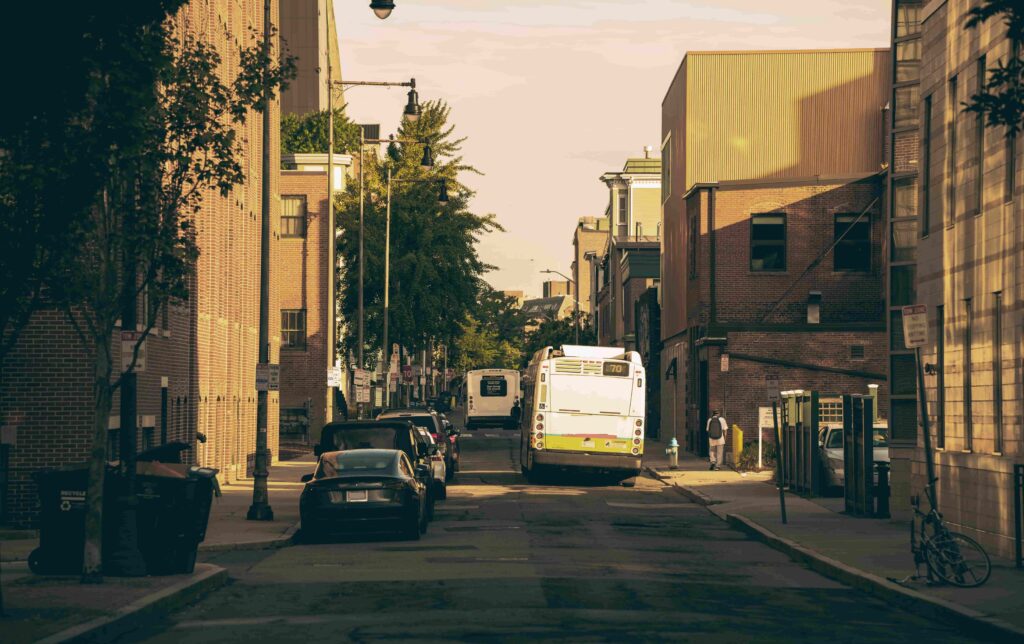
Cambridge has a combination of major streets, residential streets, one-way streets, heavy pedestrian and bicycle activity, restricted areas, and streets where truck traffic is regulated.
The City maintains designated truck routes and a list of truck-restricted streets. Some streets have restrictions on commercial trucks, although local access may be permitted when the truck has a destination on that street or nearby.
For a professional company, this means route planning matters.
A box truck isn’t a passenger car.
You can’t assume that every route suggested for a small vehicle is automatically the best route for a large one.
An experienced driver needs to pay attention to:
| What the driver watches | Why it matters in Cambridge |
|---|---|
| Road signs and truck restrictions | Some streets limit commercial trucks |
| Turning space and vehicle dimensions | Narrow residential streets and tight corners |
| Overhead clearance | Trees, wires, and low structures |
| Bicycle lanes and pedestrians | Heavy foot and bike traffic near squares and campuses |
| Traffic conditions | Time of day changes how long the approach takes |
| Safest practical approach | Arriving on the right side of the street, ready to load |
That experience becomes particularly valuable in a dense city like Cambridge.
Experience Behind the Wheel Is Part of Moving Experience
When customers evaluate companies, they understandably focus on how carefully the crew will handle furniture.
They should.
But professional work starts before anyone touches the first box.
First, the driver has to safely get the truck to the property. Then the crew has to understand where it can load, and the whole team needs to know how to approach the building without creating unnecessary risk or delay.
At Better Call Moving Inc., our operations in the Boston and Billerica areas mean our crews regularly work throughout Greater Boston, including Cambridge. That’s also why our local moving services start with a question about parking, not just inventory.
Experienced drivers who are familiar with the area understand that these streets require attention.
A narrow street, an unexpected restriction, difficult turning space, or an unsuitable route can create unnecessary problems before the job even begins.
Our objective is not to see how quickly we can get a truck from Point A to Point B. It is to get there safely, legally, and prepared to work.
Cambridge Moves Require More Than Parking
Parking is one of the biggest things to plan, but it isn’t the only one.
Cambridge has an unusual mix of housing. You may be leaving a modern apartment building with elevators and a loading area, an older multi-family property with narrow staircases, or a house on a residential street where parking is limited. You may also be heading into a condominium where building management has specific requirements for contractors.
These situations require different planning.
Before the big day, think about:
| Check | Question to answer |
|---|---|
| Building access | How will the crew enter the property? |
| Stairs | Are they narrow, steep, or difficult to navigate with large furniture? |
| Elevators | Does the building have one, and does it need to be reserved? |
| Doors and hallways | Will large furniture fit without disassembly? |
| Truck location | How close can the truck legally get to the entrance? |
| Building requirements | Does management require a Certificate of Insurance or specific hours? |
| Furniture | Are there oversized items that need to be disassembled before they can leave the apartment? |
Ten minutes spent discussing these details in advance can prevent much larger delays later. For the full list, see our checklist for preparing for movers.
Pro Tip: Take two quick photos before you call for an estimate: one of the curb in front of your entrance and one of the staircase. They answer half of the planning questions in seconds.
Harvard Square and Other Busy Cambridge Areas Require Extra Attention
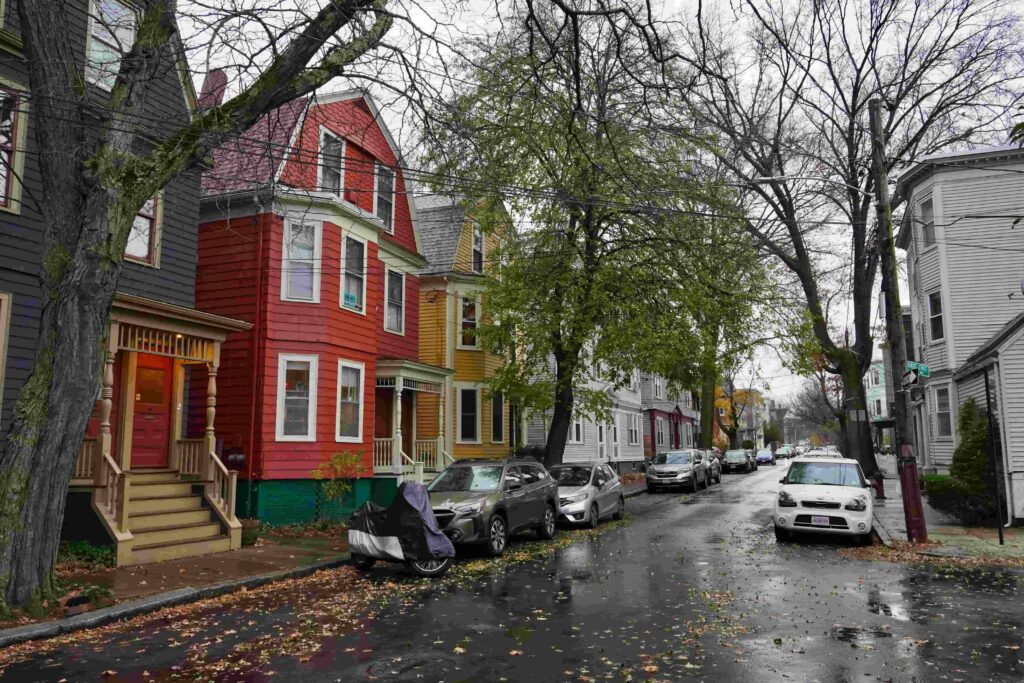
Cambridge is internationally known for education, research, technology, and innovation. It is home to Harvard University and the Massachusetts Institute of Technology (MIT), along with major employers, research institutions, restaurants, shops, residential neighborhoods, and busy commercial areas.
That creates a city with constant activity: students, residents, workers, visitors, cyclists, pedestrians, delivery vehicles, public transportation, and, naturally, box trucks.
Areas around Harvard Square, Central Square, Kendall Square, East Cambridge, Porter Square, and other busy parts of the city can require additional planning simply because so much is happening in a relatively small area. For research offices and labs around Kendall Square, our laboratory and biotech moving team handles the specialized side of the work.
A crew member carrying a dresser out of a building isn’t working in isolation.
People may be walking past the entrance, bicycles may be traveling alongside the truck, and traffic may be passing only a few feet away.
The crew has to pay attention not only to the furniture but also to the environment around it.
That is why safety and organization matter just as much as speed.
A Shorter Carry Can Mean a Better Move
People sometimes underestimate what professionals call a long carry.
If the truck is 20 or 30 feet from the entrance, loading is relatively straightforward.
Put that truck much farther away, and suddenly every item has to travel that additional distance.
One sofa?
Probably not a major issue.
But a complete household?
Now multiply that distance by dozens—or hundreds—of trips between the building and the truck: boxes, mattresses, dining chairs, dressers, tables, TVs, lamps, and office furniture.
Everything has to make the same trip.
That additional walking adds up over the day.
Longer carries can also make protecting furniture more challenging when belongings spend more time outside the building.
This is why reserving appropriate curb space close to your property can be much more than a convenience.
A reserved space can be part of an efficient plan. A bigger crew can help with a long carry too — our guide on how many movers you need explains when it’s worth it.
Q: Is a Moving Van Permit required for every move in Cambridge?
A: The permit is what lets you legally reserve curb space for the truck. Without one, the crew has to use whatever legal parking is free on the day, which can mean a much longer carry. Check the City’s permit page for current rules, and apply at least seven calendar days ahead.
Planning a move in Cambridge? Tell us both addresses, and we’ll help you plan parking, the truck route, and the right crew before moving day.
Moving Into Cambridge? Check Both Addresses
Here’s something customers sometimes overlook.
They carefully prepare parking at the address they’re leaving—but forget about the destination.
If you’re relocating within Cambridge, you may need to think about parking and access at both locations.
If you’re coming from another city, the Cambridge destination still needs to be planned.
And if you’re leaving for Boston, Newton, Wellesley, Needham, Billerica, or another Massachusetts community, the same principle applies in reverse: good planning should cover both ends of the job.
| Your route | Plan parking at | Where to check |
|---|---|---|
| Within Cambridge | Both addresses | City of Cambridge Moving Van Permit |
| Into Cambridge from another city | The Cambridge destination (and your current address) | Cambridge permit + your current city’s rules |
| Cambridge to Boston | Both addresses | Cambridge permit + Boston moving truck permit |
| Cambridge to the suburbs | Cambridge address; driveway or street at the destination | Cambridge permit + the destination town |
The crew needs to load efficiently.
But it also needs to unload efficiently.
A perfect parking arrangement at your pickup address doesn’t help much if the truck reaches the destination and there is nowhere appropriate to park.
When possible, investigate parking conditions at both addresses in advance. Our guide on parking permits for a moving truck compares the rules in Boston, Cambridge, Somerville, and Brookline.
Pro Tip: Boston and Cambridge have different lead times. Boston’s online permit is requested at least 15 days ahead, while Cambridge asks for at least seven, so on a Cambridge-to-Boston move, start with the Boston side.
Don’t Forget Your Building’s Rules
City parking rules are only one part of the equation.
Your building may have its own requirements.
| Building requirement | What to do in advance |
|---|---|
| Certificate of Insurance (COI) | Send the building’s COI request to your mover early |
| Elevator reservation | Book the time slot with management |
| Allowed days and hours | Schedule the move inside the permitted window |
| Designated loading area | Confirm where the truck should stand |
| Floor, wall, and elevator protection | Ask what protection the building expects |
Some apartment and condominium buildings require a Certificate of Insurance (COI) from the company before the crew enters the property.
Some require elevator reservations.
Others restrict this kind of work to certain days or hours.
Certain buildings have designated loading areas, and some properties require protection for elevators, floors, walls, or common areas.
These requirements should be discussed before the big day.
Waiting until the truck arrives to discover that the elevator needed to be reserved is not an efficient way to begin.
Neither is learning that building management requires documentation that hasn’t been prepared.
A professional company should ask about these issues.
The customer should also check with property management ahead of time.
Everything works best when both sides prepare.
Protecting Your Belongings Starts With Planning
When people think about protecting furniture, they usually think about blankets, wrapping, boxes, and careful handling.
Those things are essential.
But protection starts even earlier.
A properly planned truck location means furniture doesn’t need to travel farther than necessary.
A properly selected route reduces unnecessary problems getting to the property.
Understanding the staircase before carrying a large sofa down it helps the crew decide whether disassembly is necessary.
Knowing the elevator schedule prevents rushed decisions.
Understanding building requirements avoids delays.
In other words, protecting your belongings isn’t one action but a process.
We want your belongings to stay safe, your property to be respected, and the whole day to be planned with safety in mind from beginning to end.
Why Local Cambridge Moving Experience Matters
A company doesn’t become a good Cambridge mover simply by adding “Cambridge” to its website.
Local experience comes from actually doing the work. That means:
- understanding that parking can change the pace of the day;
- recognizing that different neighborhoods create different challenges;
- having drivers who understand that truck routing requires more attention than driving a personal vehicle;
- knowing to ask about elevators, COIs, stairs, building entrances, loading areas, and parking in advance.
Better Call Moving regularly completes jobs throughout Cambridge and the Greater Boston area.
That experience helps us know what questions to ask before the work begins.
And sometimes, asking the right question ahead of time is what prevents a problem later.
How to Prepare for Your Cambridge Move
If you’re planning to relocate in Cambridge, don’t wait until the morning of to think about logistics.
| When | What to do |
|---|---|
| As soon as the date is set | Look at parking conditions around both properties |
| At least 7 days before | Check with the City of Cambridge whether a Moving Van Permit is appropriate and apply |
| 1–2 weeks before | Talk to building management or your landlord; reserve the elevator; ask whether a Certificate of Insurance is required |
| When requesting an estimate | Tell the company about narrow stairways, difficult entrances, oversized furniture, or unusual access conditions |
| Before booking | Provide an accurate inventory and send pictures of anything difficult to explain over the phone |
The objective isn’t to make things complicated. It’s exactly the opposite.
The more details you solve in advance, the fewer problems you have to solve while the clock is running.
Looking for Movers in Cambridge, MA?
If you’re searching for Cambridge movers, movers in Cambridge MA, local movers in Cambridge, movers near me in Cambridge, or a moving company serving Cambridge and Greater Boston, Better Call Moving Inc. is ready to help plan your relocation.
Whether you’re staying within Cambridge, coming into the city, or leaving for another city or state, the details matter. For moves beyond Massachusetts, see our long-distance moving services.
- Where will the truck park?
- What route should it take?
- How far is the entrance from the curb?
- Are there stairs?
- Is there an elevator?
- Does the building require a COI?
- Are there oversized pieces of furniture?
Those aren’t small questions.
They can affect the time, safety, efficiency, and overall experience of your relocation.
At Better Call Moving Inc., we believe professional work should begin with preparation—not with the truck arriving and everyone trying to figure things out on the spot.
Ready to plan your Cambridge move? Call (617) 959-4853 or send us your addresses and inventory, and we’ll map out parking, route, and crew before the big day.
Frequently Asked Questions
Do I need a permit to park a moving truck in Cambridge?
A Moving Van Permit from the City of Cambridge is how you legally reserve curb space for the truck. According to the City, permits can be issued for up to three consecutive days, and applications should be submitted at least seven calendar days in advance.
How far in advance should I apply for a Cambridge Moving Van Permit?
At least seven calendar days before your date, per the City. Applying as soon as your date is confirmed gives you the best chance of getting the curb space you need.
Why does parking affect the cost of a Cambridge move?
On an hourly move, every extra step between the building and the truck is billable time. A truck parked at the entrance shortens every trip, while a truck half a block away multiplies that distance by every box and piece of furniture.
Can a moving truck drive on any street in Cambridge?
No. The City maintains designated truck routes and truck-restricted streets, although local access may be allowed when the truck has a destination on that street. An experienced driver plans the approach before moving day.
What should I ask my building before moving in or out?
Ask whether the building requires a Certificate of Insurance (COI), an elevator reservation, specific moving days or hours, a designated loading area, or protection for floors, walls, and elevators.
Recommended Reading