Practical guidance for relocating in Newton, Wellesley, and Greater Boston — with thoughtful planning, careful furniture protection, and experienced crews.
A beautiful home deserves more than a truck parked in the driveway.
When you’re relocating in Newton or Wellesley, the concern isn’t simply whether your furniture will reach the new address. It’s whether the dining table will arrive without a scratch, whether the hardwood floors will remain untouched, and whether the crew will protect the staircase, respect your home, and arrive when expected.
And whether you’ll feel comfortable trusting strangers with belongings you’ve spent years choosing, collecting, and caring for.
At Better Call Moving Inc., we understand why those details matter.
With operating locations in Billerica and Boston, we serve homeowners and residents throughout Newton, Wellesley, and Greater Boston. Our approach combines experienced teams, careful preparation, and attention to the conditions of each property.
Because a successful relocation isn’t just about getting everything into the truck.
It’s about how your home and belongings are treated from the first box to the last piece of furniture.
Key Takeaways
| Takeaway | Details |
|---|---|
| Plan around the house | Doorways, staircases, banisters, and driveways shape the plan. |
| Protect furniture and floors | Pads, wrapping, floor runners, and door and banister protection. |
| Check local parking rules | Newton allows metered-space reservations; Wellesley rules depend on street use. |
| Ask about valuation | Basic liability is weight-based and may not cover a valuable table. |
| Name valuables early | Antiques, artwork, and designer pieces need a handling plan in advance. |
Why Newton and Wellesley Relocations Require a Different Level of Care
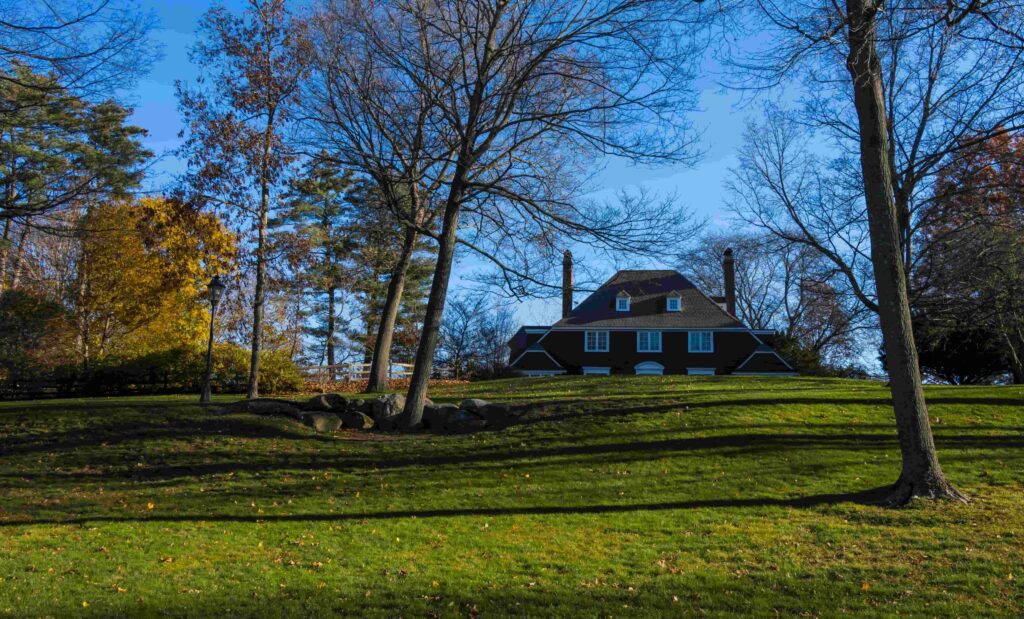
Newton and Wellesley have some remarkable homes. You’ll find traditional New England architecture, historic properties, renovated Colonials, custom-built residences, and contemporary homes with carefully selected finishes.
Each presents its own challenges.
An older house may have narrow doorways, steep staircases, and original woodwork. A newly renovated home may have expensive flooring, delicate wall finishes, and custom cabinetry. A larger property may have a long driveway, landscaped grounds, or furniture that requires careful disassembly before it can be carried out.
In Newton’s historic neighborhoods, including parts of Chestnut Hill, Newtonville, Auburndale, and Newton Upper Falls, preserving architectural character is an important part of the community.
Wellesley has its own history of distinctive residential architecture, including established neighborhoods and historic properties around Wellesley Square, Wellesley Hills, and Wellesley Farms.
A professional crew needs to pay attention to the actual house, not just the address.
Before carrying a large piece of furniture, the right questions are practical:
- Will it fit through the doorway?
- Does the staircase turn sharply?
- Is there enough clearance around the banister?
- Does the floor need additional protection?
- Can the truck access the driveway safely?
Those answers determine how the job should be planned.
| Type of home | Typical challenge |
|---|---|
| Older or historic house | Narrow doorways, steep staircases, original woodwork |
| Newly renovated home | Expensive flooring, delicate wall finishes, custom cabinetry |
| Larger property | Long driveway, landscaped grounds, furniture that needs disassembly |
Your Furniture May Be Worth Thousands. We Treat the Details Accordingly.
Consider a dining table worth $10,000.
It may be the centerpiece of a family’s dining room — custom-made, imported, or chosen to complement the home’s interior.
One careless turn through a doorway can leave a mark that isn’t easy to repair. A poorly secured table can shift during transportation. An unprotected edge can damage a wall or doorframe.
And the cost of a mistake isn’t always limited to the furniture.
At Better Call Moving, our focus is on reducing those risks before lifting begins.
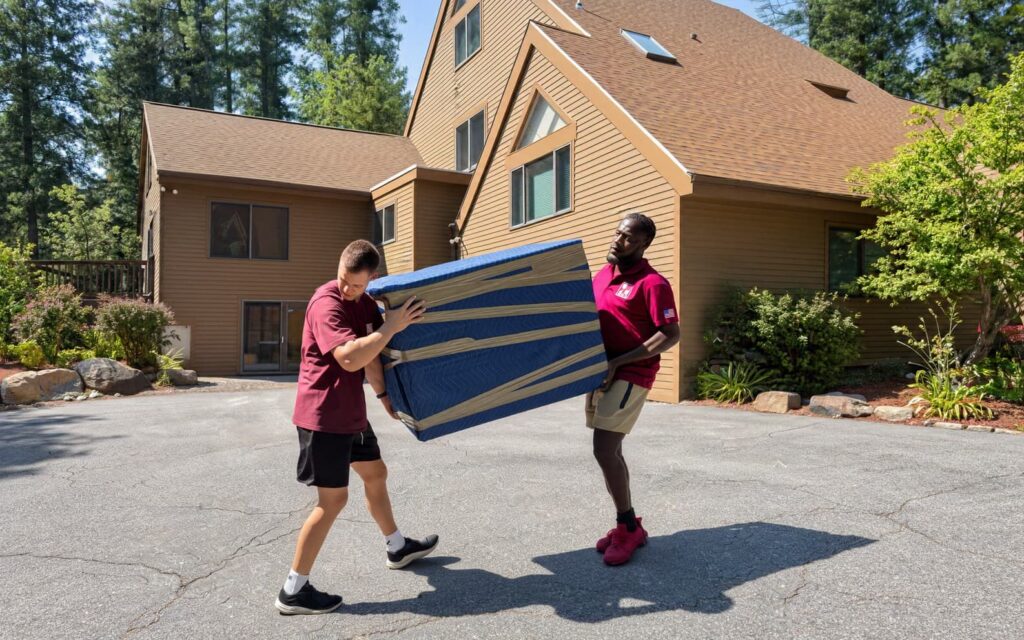
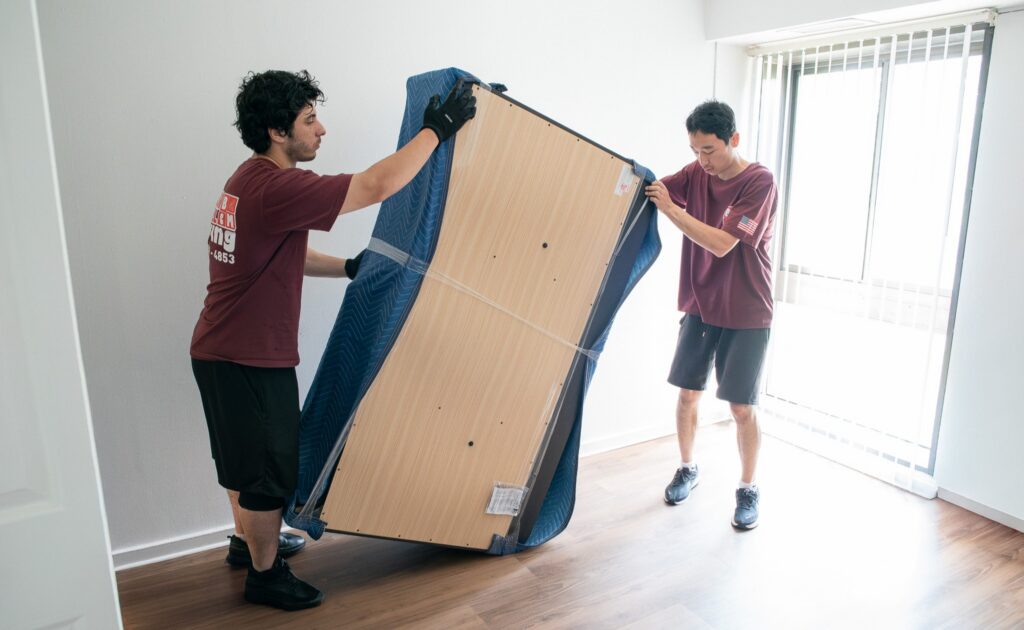
For valuable or delicate pieces, we review the size, construction, surfaces, and handling requirements. Appropriate furniture pads, protective wrapping, straps, and equipment can help reduce exposure to scratches, shifting, and impact.
The protection method should match the item. A polished wooden table, a glass cabinet, and an upholstered sofa don’t all need the same treatment.
We also encourage customers to identify unusually valuable, fragile, antique, or irreplaceable belongings in advance so that special handling and coverage options can be discussed.
| Item | Protection that fits |
|---|---|
| Polished wooden table | Furniture pads, wrapped edges, secured legs |
| Glass cabinet | Disassembled shelves, extra padding, upright transport |
| Upholstered sofa | Stretch wrap plus pads to protect fabric |
| Antiques and artwork | Special handling plan discussed in advance |
Careful work starts with understanding what you’re relocating — and why it matters to you.
Pro Tip: Take close-up photos of valuable furniture before the move: corners, legs, and finished surfaces. They help both you and the crew agree on the starting condition.
Protecting the House Is Just as Important as Protecting the Furniture
A relocation can affect more than the items being transported.
Hardwood floors, marble entryways, painted walls, stair railings, doorframes, and custom trim are all exposed to potential damage when furniture is carried through a home.
Our goal is to plan appropriate protection before the heavy work begins.
Depending on the property and job requirements, that may involve:
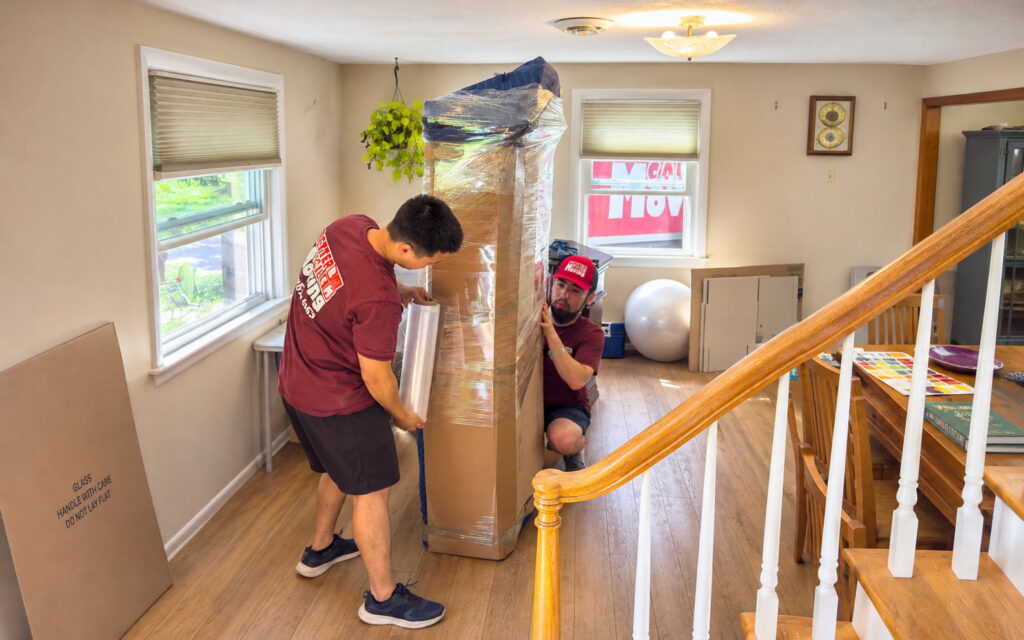
- floor runners or other suitable surface protection;
- furniture pads and protective wrapping;
- doorway, corner, and banister protection where appropriate;
- careful furniture disassembly and reassembly when arranged;
- suitable dollies, lifting equipment, and securing straps;
- extra attention to narrow hallways, staircases, and finished surfaces.
Protection isn’t simply about using more blankets. It’s about choosing the right materials and handling techniques for the surfaces and items involved.
A beautiful home should not become a construction zone just because the big day has arrived.
Pro Tip: Walk the path from each large room to the front door before the estimate. Mention any tight turn, low ceiling, or banister to the company so the right protection is packed.
Relocating in Newton, MA: Local Knowledge Beyond the Address
Newton isn’t one uniform neighborhood. Its thirteen villages have different streets, housing styles, parking conditions, and property layouts. If you’re searching for Newton movers, ask how the crew plans access for your specific village and street.
A job in Newton Centre may involve different access considerations from one in West Newton, Newton Highlands, Waban, or Chestnut Hill.
Some homes have private driveways with straightforward truck access. Others require careful coordination around street parking, narrow approaches, shared driveways, or busy neighborhood roads.
That’s why we encourage customers to discuss access conditions in advance.
Parking and Truck Planning in Newton
The City of Newton allows reservations of certain public metered parking spaces for short-term needs, including moving vans.
Where curbside access is limited, reserving an appropriate space in advance may help reduce carrying distance and avoid parking problems.
Not every Newton relocation requires a special parking reservation. The appropriate arrangements depend on the specific address and restrictions.
Our team can discuss truck access and parking requirements with customers during planning, including whether they should contact the city or obtain permission for a particular loading location.
A few minutes of preparation can prevent an avoidable delay on the day itself.
Q: Do I need a permit to park a moving truck in Newton?
A: Not always. Newton allows reservations of certain metered spaces for short-term needs such as moving vans, which helps when curbside access is limited. Homes with a private driveway often don’t need one. Check the rules for your address in advance.
Relocating in Wellesley, MA: Careful Handling for Distinctive Homes
Wellesley has a strong tradition of residential architecture and historic preservation. Our Wellesley movers page covers the services available in town.
From established neighborhoods near Wellesley Square and Wellesley Hills to homes around Wellesley Farms, properties vary in age, design, and access.
Some have carefully preserved architectural details. Others feature extensive renovations, custom millwork, stone surfaces, or large pieces of designer furniture.
These are not homes where a crew should improvise with oversized items.
Beforehand, it helps to understand the route from the room to the truck — including doorways, stairs, driveway access, and any landscaping or exterior features that need protection.
Parking, Driveways, and Local Requirements in Wellesley
Unlike Boston’s dedicated truck parking reservation program, Wellesley does not publish a universal permit requirement for every ordinary residential relocation.
However, special use of public streets or rights-of-way, oversized vehicles, and certain equipment may require town approval.
The practical lesson is simple: check the conditions of the actual property rather than assuming the same rules apply everywhere.
If the truck needs unusual street access, or if the property has a difficult driveway, those details should be addressed in advance.
| Town or city | Parking for the truck | What to check |
|---|---|---|
| Newton | Some metered spaces can be reserved for moving vans | Street parking near your address, shared driveways |
| Wellesley | No universal permit for ordinary moves | Special street use, oversized vehicles, difficult driveways |
| Boston | Moving truck permit reserves curbside space | Apply in advance; permit doesn’t override snow emergencies or tow zones |
What About Truck Permits in Boston?
Some Newton and Wellesley relocations begin or end in Boston.
Boston has a parking permit program that allows customers to reserve curbside space for a truck on eligible city-owned streets, run by the City of Boston Parking Clerk.
A permit is not legally required for every Boston job, but it can be valuable in neighborhoods where parking is limited.
Online applications generally require advance planning, and certain streets or restrictions may require different arrangements.
A Boston permit also does not override snow emergencies, tow zones, construction restrictions, or other prohibited parking areas.
Truck routing matters, too. For example, Boston warns truck drivers about the low clearance on Storrow Drive.
When Boston is involved, we believe the truck route and loading arrangements deserve the same attention as the furniture inventory. Our guide on parking permits for a moving truck covers the details for Boston, Cambridge, Somerville, and Brookline.
Moving to or from Newton or Wellesley? Tell us both addresses and any valuable pieces, and we’ll plan protection, access, and the right crew in advance.
Experienced Crews, Clear Responsibilities, and Safety-Minded Work
Good equipment is important, and the people using it matter just as much.
An experienced crew should understand safe lifting, load distribution, furniture handling, communication, and the importance of working as a team.
At Better Call Moving, we emphasize professional conduct, job preparation, and responsible handling.
We believe each team should know who is coordinating the job, which items need special attention, and how to communicate concerns before they become problems.
Workplace safety principles — including those reflected in OSHA guidance on material handling and injury prevention — are important to how this work should be approached.
Heavy furniture should not be handled through brute force or unnecessary risk. The appropriate crew size, equipment, and handling method depend on the job. Our guide on how many movers a job needs explains how crew size is chosen.
If an item cannot be carried safely under the original plan, the responsible decision is to reassess the situation.
Protecting people and property is more important than forcing a piece of furniture through an opening.
Insurance, Liability, and Valuable Belongings: Questions Worth Asking
For a homeowner, choosing a company should involve more than comparing hourly rates.
Massachusetts requires companies performing intrastate household-goods relocations to operate under the Department of Public Utilities’ regulatory framework. You can confirm a company on the list of DPU-regulated moving companies.
Customers should verify a company’s operating authority and review the written estimate, bill of lading, and applicable valuation terms.
One important distinction: a company’s insurance and its contractual liability for your belongings are not necessarily the same thing.
Standard released-value liability can provide very limited compensation relative to the actual replacement cost of expensive furniture. According to the state’s guide to moving within Massachusetts, basic liability is 60 cents per pound per article.
For example, a valuable dining table may weigh only a fraction of what its purchase price suggests. Weight-based liability alone may not reflect its true value.
That’s why we encourage customers to ask about valuation options, exclusions, and any additional coverage that may be appropriate before transporting antiques, artwork, designer furniture, or other high-value items.
We want customers to understand their options in advance — not discover important limitations after an incident.
| Question to ask | Why it matters |
|---|---|
| What liability is included by default? | Basic coverage is limited and weight-based |
| What valuation options are available? | Higher-value coverage can protect expensive items |
| What is excluded? | Some items or packing situations may not be covered |
| How do I report damage? | Knowing the process avoids delays |
Why Having Locations in Billerica and Boston Matters
Better Call Moving serves customers through its locations in Billerica and Boston.
That geographic presence supports our work across Greater Boston, including Newton and Wellesley.
For customers, the advantage isn’t simply having a company nearby. It’s working with a team familiar with the region’s mix of suburban homes, urban buildings, traffic patterns, and logistics.
A Newton-to-Wellesley relocation is different from a Boston apartment job. A large single-family home requires different preparation from a condominium with elevator reservations and building management requirements.
We review those differences when planning the job.
Our goal is to match the arrangements to the property and the customer’s needs, rather than treating every relocation as the same type of job. For a standard household relocation, see our local moving services.
What We Work to Prevent on the Big Day
Many problems begin long before the truck arrives.
An incomplete inventory leads to the wrong crew size. Unmeasured furniture gets stuck in a staircase. An unplanned parking situation increases carrying distance. A valuable item isn’t identified until the crew is already handling it.
We believe these are problems worth addressing in advance. Our checklist for preparing for movers helps you cover the basics.
At Better Call Moving, our planning priorities include:
- reviewing the furniture inventory and special handling requirements;
- identifying large, heavy, fragile, and high-value items;
- discussing access, stairs, elevators, and parking;
- selecting an appropriate crew and equipment;
- clarifying customer expectations and timing;
- explaining the estimate and relevant service terms;
- planning for suitable furniture and property protection.
No professional company can honestly promise that an accident is impossible.
What a responsible company can do is take preparation seriously, communicate clearly, and make decisions that reduce avoidable risks.
That is the standard we aim to bring to every job.
Relocating to Newton or Wellesley? Choose a Company That Understands What Matters.
Maybe you’re relocating to a larger family home in Wellesley. Perhaps you’re going between Newton neighborhoods, downsizing, or leaving Boston for a quieter suburban setting.
Whatever the reason, it represents a significant transition.
You deserve a company that respects your schedule, understands the value of your belongings, and recognizes that the home itself needs protection.
Better Call Moving Inc. combines experienced teams, regional knowledge, thoughtful preparation, and a commitment to careful handling.
We’re here to help make your Newton or Wellesley relocation organized, professional, and as smooth as possible.
Request your estimate today. Tell our team your pickup and delivery addresses, preferred date, approximate inventory, and any special concerns about valuable furniture or property access. Call (617) 959-4853, and we’ll review the details and help you plan the next step.
Frequently Asked Questions
How do movers protect hardwood floors?
Common protection includes floor runners, furniture pads, and careful handling routes. Ask the company which materials it uses for your specific floors and finishes.
Do I need a parking permit for a moving truck in Newton?
Not for every move. Newton allows reservations of certain metered spaces for moving vans, which helps where curbside access is limited.
Do I need a moving permit in Wellesley?
Wellesley doesn’t publish a universal permit requirement for ordinary residential moves, but special use of public streets, oversized vehicles, or certain equipment may need town approval.
Is my $10,000 dining table fully covered by basic liability?
Usually not. Basic released-value liability is based on weight, so ask about valuation options before moving antiques, artwork, or designer furniture.
What should I tell movers about valuable furniture?
Its size, construction, finish, value, and any fragile parts, plus the route through the house. Identifying these items in advance allows a proper handling plan.
Better Call Moving Inc. — Moving Your Belongings. Respecting Your Home.
Recommended Reading