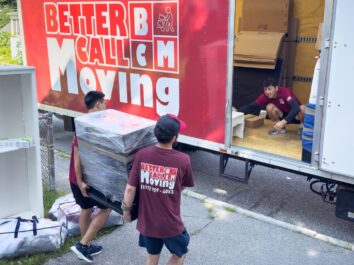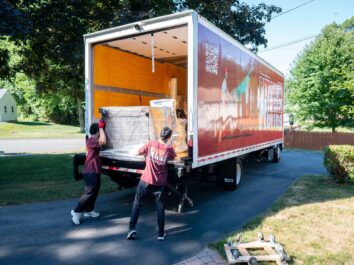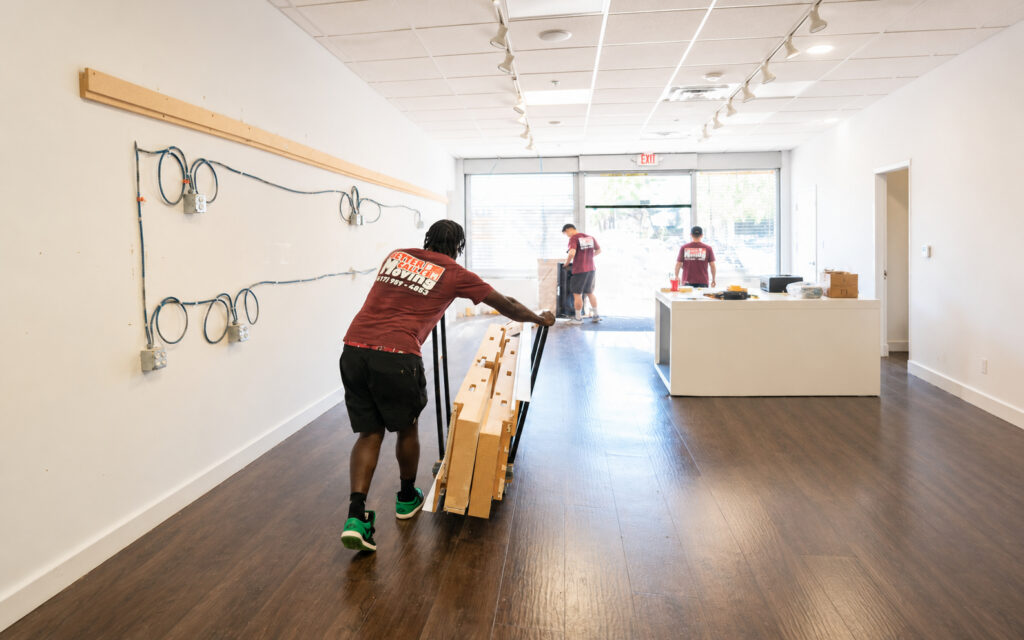
Relocating an office is different from relocating a house. The furniture may look familiar — desks, chairs, cabinets, tables — but the responsibility behind the job is completely different.
A company might have employees waiting to return to work. A flooring contractor could be scheduled for 8:00 AM. Building management sometimes provides only a certain window for the loading dock or elevator. Important files have to stay organized. Furniture might need to leave one floor in the morning and come back that same night.
This is why a good office move is really about coordination.
Better Call Moving Inc. provides office moving, corporate relocation, commercial relocation, and business-to-business services throughout Boston, Greater Boston, and Massachusetts. Our commercial experience includes offices and projects in business environments such as laboratories and banks, as well as work involving facilities associated with companies such as Gillette and New Balance.
We have also handled a type of commercial project that people don’t always think of as an office relocation: temporarily clearing an office so contractors can replace flooring, paint, repair, or renovate the space — and then putting it back together.
Sometimes all of that has to happen before employees return the next morning.
Key Takeaways
| Takeaway | Details |
|---|---|
| Coordination comes first | Building access, elevators, contractors, and deadlines shape the plan more than the number of desks. |
| Renovation support | Move Out → Contractors In → Move Back, often before employees return. |
| Off-hours options | Early-morning, evening, and overnight work for qualifying projects. |
| Matched truck and crew | Approximately 20-, 24-, and 26-foot trucks, loaded in the order the office will be reset. |
| Ask before moving | Confidential records, lab materials, and bank security are reviewed before the job. |
A Good Office Move Starts Before the Truck Arrives
When we look at a corporate project, the first question isn’t simply how many desks there are.
We need to understand how the business works and what has to happen during the relocation.
| Planning question | What it changes |
|---|---|
| Is the company relocating to another building? | Route, two sets of building rules, truck size |
| Are we clearing only one department? | Crew size and how furniture is grouped |
| Does furniture need to go into temporary storage? | Storage space and a second delivery date |
| Are contractors taking over the space after we leave? | Deadline for clearing and the reset schedule |
| Is everything going to one location, or are there several stops? | Loading order inside the truck |
Then there are practical questions: building access, parking, elevators, loading areas, file cabinets, conference rooms, IT equipment, oversized furniture, and the amount of time available.
All of these details affect the crew and truck we send.
Better Call Moving operates different truck sizes, including approximately 20-foot, 24-foot, and 26-foot trucks. A larger truck isn’t automatically the best fit for every corporate relocation. Access at a Boston office, the loading area, parking restrictions, the number of stops, and the truck’s loading order can be just as important as total volume. If the truck will park on a city street, our guide to moving truck parking permits explains the rules in Boston and nearby cities.
The same is true for the crew. Sending more people doesn’t automatically make the job better. A well-sized team of trained crew members, with clear responsibilities and proper equipment, is usually more important. Our guide on how many movers a job needs explains how we size a crew.
Pro Tip: Ask building management for the loading dock and freight elevator rules in writing as soon as the date is set. Reserved windows, COI wording, and allowed hours decide the whole schedule.
Office Furniture Requires the Right Equipment
Anyone who has relocated a large office knows how heavy commercial furniture can be.
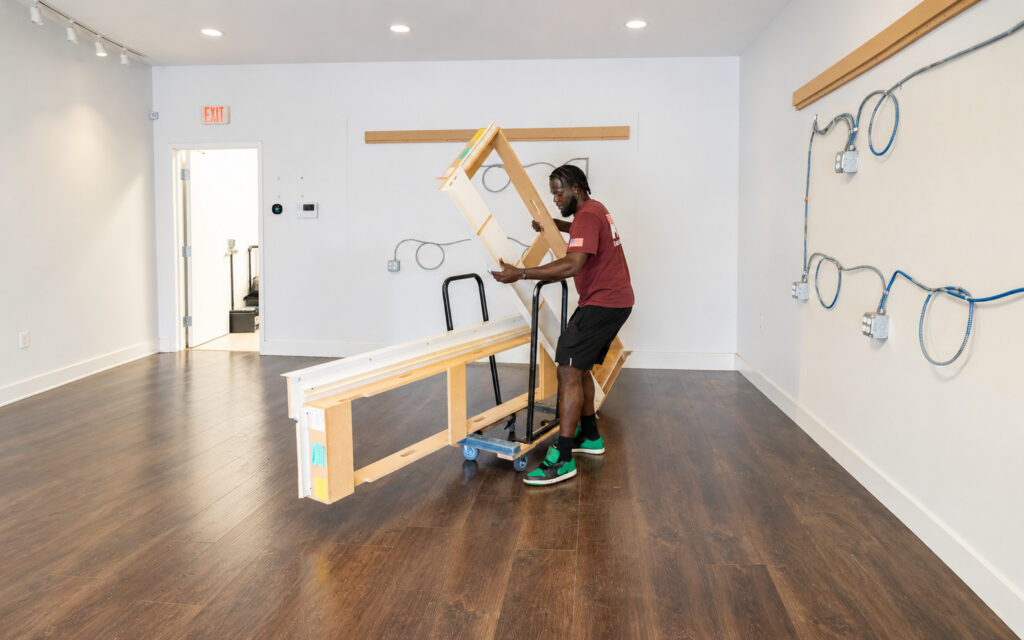
File cabinets, conference tables, desks, shelving, storage units, and other office furniture aren’t things we want our crews improvising with.
Depending on the project, our teams can use commercial dollies, heavy-duty equipment, carts, straps, blankets, tools, floor protection, and wrapping materials. The exact setup depends on what is being transported and where it is going.
| Item or space | Typical equipment |
|---|---|
| File cabinets and shelving | Heavy-duty dollies, straps |
| Conference tables | Blankets, wrapping, tools for disassembly |
| Office chairs and small items | Carts for fewer trips |
| Finished floors and long hallways | Floor protection |
| Glass doors and elevators | Wall and door protection, blankets |
A long hallway calls for a different approach than a small private office. An elevator building is different from a ground-floor commercial space. A heavy conference table creates a different problem than 30 office chairs.
Good equipment saves time, but more importantly, it gives the crew more control.
And control matters in an office.
There could be finished floors, glass doors, narrow hallways, expensive furniture, and people from several companies working around us. Working quickly is useful only when the crew can do it without creating another problem.
File Cabinets Are More Than Heavy Furniture
File cabinets deserve particular attention.
They’re heavy, but weight isn’t the only concern. They often contain business records that have to remain organized and accounted for during the office relocation.
If a company has multiple departments, we don’t want the contents from accounting arriving in the wrong part of the new office. We also don’t want a cabinet reaching the destination safely and then spending an hour trying to determine where it belongs.
For larger projects, a simple labeling system can save a surprising amount of time: department, employee, office number, floor, and room.
| Label field | Example |
|---|---|
| Department | Accounting |
| Employee | J. Smith |
| Office number | 412 |
| Floor | 4 |
| Room | Records room |
It doesn’t have to be complicated. It just has to make sense to both the customer and the crew.
If records require special confidentiality, documented chain-of-custody procedures, regulatory handling, or another type of secure records management, we want to know that in advance. The scope can then be reviewed and the appropriate handling requirements determined.
Some risks are managed by being careful. Others are managed by asking the key question before the project starts.
Pro Tip: Print the floor plan of the new office with room numbers and tape a copy at every entrance. The crew matches labels to rooms without stopping to ask.
Office Moving for Flooring, Painting and Renovation
This is an important part of our commercial work.
A business isn’t always relocating anywhere. It might simply need new floors, new carpet, painting, repairs, or a full office renovation.
The problem is that the contractor needs an empty work area while the company needs to keep operating.
In these situations, Better Call Moving can coordinate the work around the contractor’s schedule.
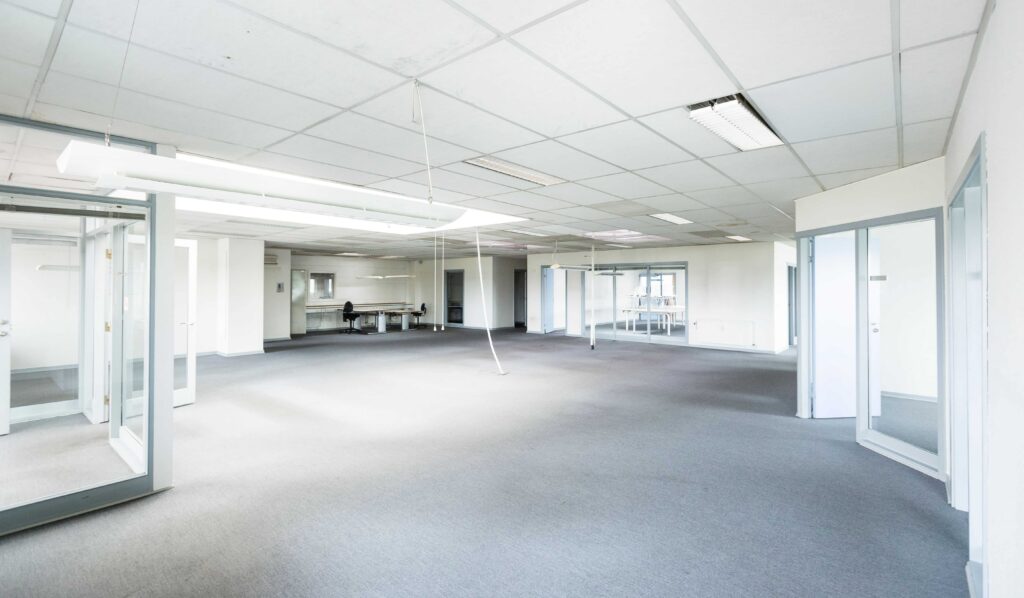
In a typical case, our crew can arrive early in the morning and remove desks, chairs, file cabinets, and other agreed furniture from the section being renovated. The flooring or painting crew can begin once the space is clear. After the contractor finishes and the area is ready, our team can return and reset the furniture.
Sometimes that second part takes place in the evening. Depending on the project, building rules, and schedule, it can continue overnight.
The office might look almost normal to an employee arriving the following morning.
Behind that result, however, there could have been two crew shifts and a full day of contractor work.
Move Out → Contractors In → Move Back.
| Stage | Who works | What happens |
|---|---|---|
| 1. Move Out | Our crew | Furniture removed from the work area, labeled by room, stored or staged |
| 2. Contractors In | Flooring, painting, or renovation crew | Work area is empty; the contractor works on schedule |
| 3. Move Back | Our crew | Furniture returned and reset, often in the evening or overnight |
It’s a simple way to describe it, but getting all three parts to work together requires everyone to respect the same schedule. If furniture needs a place to wait between stages, our commercial warehousing can hold it.
Why Overnight Office Moving Can Make Sense
We don’t recommend overnight work for its own sake.
Sometimes it is simply the most practical way to protect normal business hours.
Imagine an office where employees leave Friday afternoon and a flooring contractor needs the space Saturday morning. Furniture has to be removed first. Once the flooring work is finished and the area is ready, the furniture has to go back before employees return.
| Example timeline | What happens |
|---|---|
| Friday afternoon | Employees leave; the crew clears the work area |
| Saturday | Flooring contractor installs the new floor |
| Saturday evening or overnight | The crew returns and resets the furniture |
| Monday morning | Employees return to a ready office |
In that case, the real deadline isn’t “finish the job” but “have the office ready when the business needs it again.”
That changes the way we schedule the project.
For qualifying projects, Better Call Moving can coordinate early-morning, evening, and overnight office work when the building rules, project requirements, and staffing allow it.
This can be particularly useful for flooring contractors, painters, renovation companies, property managers, and businesses that cannot easily close an office for several working days.
Working With Contractors Instead of Around Them
One thing we’ve learned from renovation projects is that the crew can’t think only about its own part of the job.
Every trade on site works to its own timeline: the flooring crew has one schedule, and the painter has another. Building management controls access, an electrician might need certain furniture cleared first, and the customer could have employees returning at a specific time.
If each company works independently, small delays start stacking up.
So when we’re supporting an office renovation, we want to know what the contractor needs from us:
- Which area should be cleared first?
- When can furniture return?
- Is there a section we shouldn’t enter yet?
- Who gives us the final approval to begin resetting the office?
Sometimes the best thing our crew can do is clear the area quickly and get out of the contractor’s way.
Then we come back when we’re needed.
That’s a different mindset from a standard residential job, and it’s one of the reasons commercial and corporate experience matters.
Q: Can you move our office furniture out in the morning and back the same night?
A: For qualifying projects, yes. We plan the move-out around the contractor’s start time and the reset around when the area is ready, including evening or overnight work when building rules and staffing allow it. The key is sharing the contractor’s schedule with us in advance.
Renovating or relocating an office? Send us the contractor’s schedule and the date the business needs the space back, and we’ll plan the crew, truck, and timing around it.
Loading an Office Truck Is Part of the Plan
A truck can be packed perfectly and still be packed incorrectly for the project.
Suppose a corporate relocation involves three departments. If the furniture needed first at the new location is buried behind everything else, the crew will handle items unnecessarily just to reach it.
The same issue becomes more important when there are several stops.
The loading order should support the unloading order.
For a renovation project, it can be important to separate furniture by floor, department, or work area so the crew can reset the office without searching through an entire truck.
This is one reason we don’t look at a truck simply as transportation. It carries part of the project’s schedule, and the way it is loaded can affect the work several hours later.

Corporate Relocation Has More People Depending on the Schedule
A residential customer is usually concerned about one household.
An office relocation can have many people waiting for the crew to finish:
| Who is waiting | What they need |
|---|---|
| Employees | Their desks |
| IT team | Access to equipment |
| Contractor | A cleared area |
| Property management | The loading dock free for the next company |
| Building staff | The freight elevator back on time after the reserved period |
That’s why reliable vehicles and proper preparation matter.
A truck problem that starts with us can quickly become somebody else’s delay.
We want our trucks, equipment, and materials prepared before the crew arrives at the customer’s location. It isn’t the glamorous side of corporate work, but when everything is working properly, nobody should have to think about it.
Communication Becomes More Important as the Project Gets Bigger
On a larger commercial job, there could be a facilities manager, office manager, property manager, general contractor, building engineer, IT team, and department managers involved in the same project.
If five people are giving the crew different instructions, time disappears very quickly.
Whenever possible, we prefer to establish a clear point of contact.
That doesn’t mean one person has to manage the entire project alone. It simply means our foreman knows who can answer questions and authorize changes when something unexpected comes up.
In advance, it’s useful to know:
| Question | Usually answered by |
|---|---|
| Who controls building access? | Property manager or building engineer |
| Who has the final furniture layout? | Office or facilities manager |
| Who coordinates with the contractors? | General contractor or facilities manager |
| What COI requirements exist? | Property management |
| Who should our crew contact if the schedule changes? | The project’s main point of contact |
These details aren’t exciting, but they’re often what separates an organized corporate relocation from a chaotic one.
Pro Tip: Put the main contact’s name and cell number on the first page of the floor plan you give the crew. When something changes at 9 PM, the foreman knows exactly who to call.
Laboratories, Banks and Other Business Environments
Better Call Moving has experience with projects in different commercial environments, including offices, laboratories, and banks.
Those environments sometimes require additional planning.
A laboratory can contain ordinary office furniture and approved non-regulated equipment alongside materials or specialized equipment that shouldn’t be handled as part of a standard commercial job. Hazardous materials, chemicals, biological materials, regulated substances, or equipment requiring specialized handling must be identified before the project so the appropriate provider and procedures can be determined. Our laboratory and biotech moving page covers this side of the work, and OSHA’s Hazard Communication standard explains how hazardous chemicals in the workplace must be labeled.
The same principle applies to banks and financial offices. Access restrictions, records, security procedures, and sensitive areas must be understood before the crew begins handling anything.
| Environment | Identify before the job |
|---|---|
| Standard office | Building access, elevators, loading dock, COI |
| Laboratory | Hazardous, chemical, or biological materials and specialized equipment |
| Bank or financial office | Security procedures, restricted areas, confidential records |
Being a professional company doesn’t mean saying yes to everything.
Sometimes it means stopping long enough to understand exactly what we’re being asked to transport.
Trained Crews Make a Difference
Commercial work puts crews into active workplaces, loading docks, elevators, finished offices, and sometimes construction environments.
Our crews receive operational and safety training related to handling techniques, teamwork, communication, equipment use, property awareness, and job-site safety. Applicable workplace safety requirements and OSHA guidance are considered as part of our safety practices, including OSHA 10 training through the OSHA Outreach Training Program.
But training isn’t only about avoiding injuries.
A trained crew should also understand how to work around other people. That includes knowing how to:
- communicate with the project contact;
- keep furniture organized;
- protect finished areas;
- use suitable equipment rather than forcing a piece through a space;
- recognize when something doesn’t match the plan and ask before continuing.
Those decisions matter on a corporate job.
Business-to-Business Moving Should Get Easier With Every Project
Better Call Moving is interested in long-term B2B relationships, especially with businesses, contractors, property managers, and facilities teams that need support more than once.
After several projects together, we should know more about how your company operates, including your:
- warehouse;
- building;
- loading dock;
- usual COI requirements;
- contractor;
- labeling system;
- type of furniture;
- contact person for our foreman.
That knowledge has value because nobody needs to start from zero every time another project comes up.
A recurring relationship should become more efficient as both companies learn how to work together.
Office Movers for Boston, Greater Boston and Massachusetts
Better Call Moving provides office moving and corporate relocation services in Boston, Cambridge, Greater Boston, and communities throughout Massachusetts. Learn more on our office movers in Boston service page.
Projects can include traditional office relocation from one building to another, internal office moves, office furniture moving, temporary relocation, multi-stop commercial projects, renovation support, flooring-related furniture removal and reset, and other planned business projects.
Some projects take place during normal business hours.
Others make more sense early in the morning or after employees leave.
And sometimes the only practical way to complete the work without disrupting the company is to coordinate part of it overnight.
The schedule should fit the business whenever the project allows it. Before you book any company, you can confirm its federal registration through the FMCSA mover search; Better Call Moving operates under USDOT 4356476.
Planning an Office Move or Corporate Relocation?
If you’re looking for an office moving company, corporate movers, commercial movers, business relocation services, office furniture movers, or a B2B partner in Massachusetts, talk to Better Call Moving about the project in advance.
Tell us what is being relocated, where it is going, who else is involved, and — most importantly — when the business needs the space back.
If contractors are involved, tell us their schedule too.
From there, we can determine the appropriate crew, truck, equipment, loading sequence, and timing for the project.
Because a successful corporate relocation isn’t measured only by whether every desk made it onto the truck.
It’s measured by how the office works after we leave.
Ready to plan your office move? Call (617) 959-4853 or send us the project details, and we’ll build the schedule around your business.
Better Call Moving Inc. — Office Moving. Corporate Relocation. Business Continuity.
Frequently Asked Questions
Can Better Call Moving move an office overnight?
For qualifying projects, yes. We can coordinate early-morning, evening, and overnight office work when building rules, project requirements, and staffing allow it, so the business can keep normal hours.
Do you help with office furniture removal for flooring or painting?
Yes. Our crew can clear the work area before the contractor starts and return to reset the furniture once the area is ready — often on the same day or overnight.
How do you keep file cabinets and records organized during an office relocation?
We recommend a simple labeling system by department, employee, office number, floor, and room. If records need special confidentiality or chain-of-custody handling, tell us in advance so the scope can be reviewed.
What truck sizes do you use for office moves?
Better Call Moving operates approximately 20-, 24-, and 26-foot trucks. The right choice depends on building access, the loading area, parking, the number of stops, and the loading order, not only total volume.
Can you move laboratory or bank offices?
We have experience with laboratories and banks. Hazardous, chemical, or biological materials and specialized equipment must be identified before the project, and bank security procedures and restricted areas reviewed in advance.
Recommended Reading