Start With the Curb, Not the Boxes
Most people planning a move think first about cartons, crews and dates. The strip of street where the truck will actually stand gets remembered last — usually on the morning it matters. Tight street parking, building policies and city ordinances can each stall a load-in before a single box leaves the hallway. Ten minutes spent on the local parking rules in advance saves you the delays, the citations and the improvising once a 26-foot moving truck is idling out front.
The Rules Change From Block to Block
There is no nationwide standard here. Every municipality writes its own ordinances, districts inside the same city differ, and a metered parking space is governed differently from an ordinary residential curb. Well before moving day, scout realistic parking spots for the truck at both ends of the trip — the address you are leaving and the one you are heading to.
Where Can the Moving Truck Legally Stand?
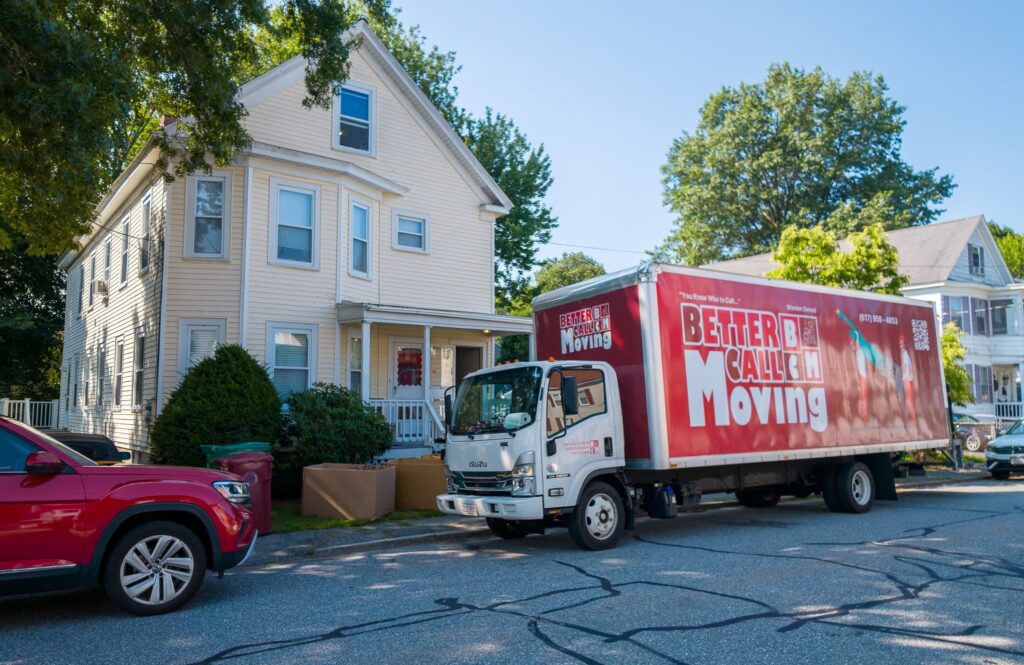
Private driveways. A driveway solves the problem when it fits. Confirm you are allowed to use it, then look at the dimensions: a loaded 26-foot truck weighs several times what a family car does and needs roughly 40 feet of clear length. Overhead matters too — branches, cable lines and a garage awning all sit lower than the roof of a full-size moving truck.
Public street parking. Read every posted sign on the block, both sides of the street, and check the municipal code before counting on a spot. Vehicle-length limits, time windows and residential-permit districts decide where a moving truck may sit and for how long.
Metered parking and commercial bays. When the crew needs a meter or a commercial loading bay, ask the city whether the space can be booked ahead and what authorization covers that use — a temporary permit, a meter bag, a written reservation.
Lanes, sidewalks and the public right-of-way. Blocking a travel lane, a sidewalk or any other slice of the right-of-way is a separate approval almost everywhere, and enforcement there tends to be fast.
Not Every Address Takes the Same Effort
A single-family house with its own driveway often needs no special parking arrangements at all: the truck pulls in, the crew works, no paperwork is filed.
Apartments, condos and dense downtown blocks are the opposite case. Narrow streets, meters, dedicated loading zones and the building’s own access rules all shrink the options for a truck that long — and the legal ones may sit a block away from the door.
That gap is the reason to settle the question early instead of solving it with the crew already standing on the sidewalk.
What a Permit Actually Gets You
“Parking permit” covers several different things depending on the municipality and the kind of move.
Often it reserves parking space at the curb for a set window so other drivers keep clear of the stretch the crew needs. Elsewhere it authorizes a designated loading bay, or grants a short-term claim on part of the public right-of-way.
Paperwork, lead times and fees differ from one jurisdiction to the next. A city that requires a filing tells you nothing about the town fifteen minutes down the road.
The only reliable answer comes from the office that issues them — the transportation department, the parking clerk’s office or public works, depending on where you are. Ask three things: whether a reservation is available for your address, how far ahead it has to be filed, and what signage you are responsible for putting up.
Booking it early gives the crew a guaranteed working space from the minute the truck pulls up.
When You Can Skip It
You generally do not need one if the moving truck fits a private driveway, can park legally at the curb, or can use a loading bay the building already provides. Even then the ordinary parking rules still apply to the vehicle: a permit creates no exemption that was not already there.
Check the Building Before You Check the City
Moving into or out of an apartment or condo? The management office keeps its own list. Expect to book the loading bay, reserve the freight elevator, keep to an approved time window, or get written sign-off before the date. Some properties go further and specify the exact spot where a moving truck may park while the crew works.
Boston: How Reserving Curb Space Works
Requirements shift from state to state, but Boston runs a clearly defined process for reserving curb space ahead of a move, and knowing it in advance is what turns moving day into a legal, predictable one.
Does Every Boston Move Need a Permit?
No. Plenty of moves happen without one. What the permit buys is certainty — reserved parking space at your address on the day you booked it.
A standard permit holds two parking spaces for one day, 7 a.m. to 5 p.m., and covers moving trucks rather than private cars. The stretch itself has to be legal to begin with: residential, commercial or metered.
A permit for two non-metered spaces runs $69 and includes two signs. If the spaces you want are metered, add a $40 fee.
Why the Permit Is Worth It in Boston
Parking in the denser neighborhoods disappears early in the day and stays gone. A reservation puts the crew at the door instead of three buildings down, and keeps other drivers out of the stretch the truck needs for loading and unloading.
That matters most for apartment and condo moves, where there is no driveway to fall back on and the curb is the only option available.
Lead Times: Online Versus In Person
Boston takes applications two ways, and the deadline depends on the route you pick.
| Method | Application window | Processing and delivery |
|---|---|---|
| Online | At least 15 days before the move, up to 8 weeks ahead | Roughly 7–10 business days for the physical permit to arrive after approval |
| In person | At least 3 days before the move, up to 8 weeks ahead | Submitted directly at the Office of the Parking Clerk |
Because the signs have to go up before the reservation takes effect, filing well ahead of moving day is the safer play.
Posting the Temporary No-Parking Signs
Once the permit is issued, the reserved stretch has to be marked before it becomes enforceable. The city requires signs at least 48 hours ahead and recommends three days.
Boston also supplies notification handouts for neighbors: leave one on each vehicle standing within half a block of the reserved stretch during the notice period. When the move is finished, take the signs and notices down and leave the curb clean.
A Permit Does Not Outrank Every Other Parking Rule
Holding one does not suspend the rest of the city’s restrictions. It is valid only on eligible city-owned streets, and it cannot be used in snow-emergency routes, construction zones, accessible parking spaces, or no-stopping, no-standing and tow zones.
Ownership of the street matters as well. On a DCR-owned road the city permit carries no weight — the Massachusetts Department of Conservation and Recreation issues its own road-access authorization, and you apply to them separately.
Some neighborhoods add their own calendar. Anyone heading to the North End in July or August should check for street closures tied to the summer feasts before locking in a date.
The route in matters as much as the destination: Storrow Drive has a 10-foot clearance limit, and moving trucks taller than that simply cannot use it.
Read the parking regulations for your exact block beforehand, and confirm that the permit you are holding actually covers that street on that day.
Whose Job Is the Permit Application?
Customer or moving company — it depends entirely on what the two of you agreed. Some customers file it themselves; some companies walk you through the steps; some handle the parking arrangements as part of the service.
Pin it down early, in writing where possible. If it falls to you, file on time and post the signage exactly as the ordinance requires.
Sorting that out in advance is what keeps the schedule intact.
Treat Both Ends of the Trip Separately
Look at the requirements at the old address and the new one as two different problems. One may need nothing at all, while the other calls for a permit, posted signs and a building booking — different city, different block, different parking rules.
What It Costs You to Skip the Parking Plan
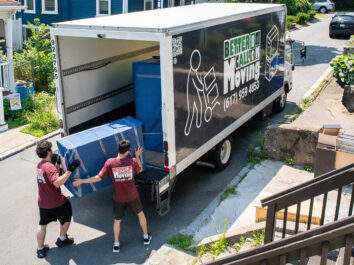
Without a parking plan, moving day itself gets harder. If the truck cannot get close to the entrance, the crew ends up carrying everything much farther, and a long carry adds hours to the job. Restricted access creates delays, and parking somewhere off-limits can mean a citation, a tow, or both.
On a busy street, a badly parked moving truck also becomes a genuine problem for neighbors, pedestrians and passing drivers. Handling the question in advance lets the crew work faster and with far less friction.
A Short Checklist Before Moving Day
- Check the parking rules that apply at both addresses.
- Pick a workable spot for the truck to load and unload.
- Confirm building access, loading bays and any other requirements from management.
- File for any permit you need as early as you can.
- Review the signage rules if a parking space has to be reserved.
- Coordinate truck access with your crew before moving day arrives.
A clear parking plan means the team can start working the moment the truck pulls up.
The Short Version
Working out where the moving truck goes before moving day heads off unnecessary delays, extra carrying and avoidable citations. Because the rules shift by location, check the parking requirements at both addresses and confirm your building’s policies ahead of time.
If a permit or a reserved parking space applies to your situation, arrange it early and make sure any required signs or other prep are handled. Done early, it lets the crew work safely and keeps the entire move on schedule.