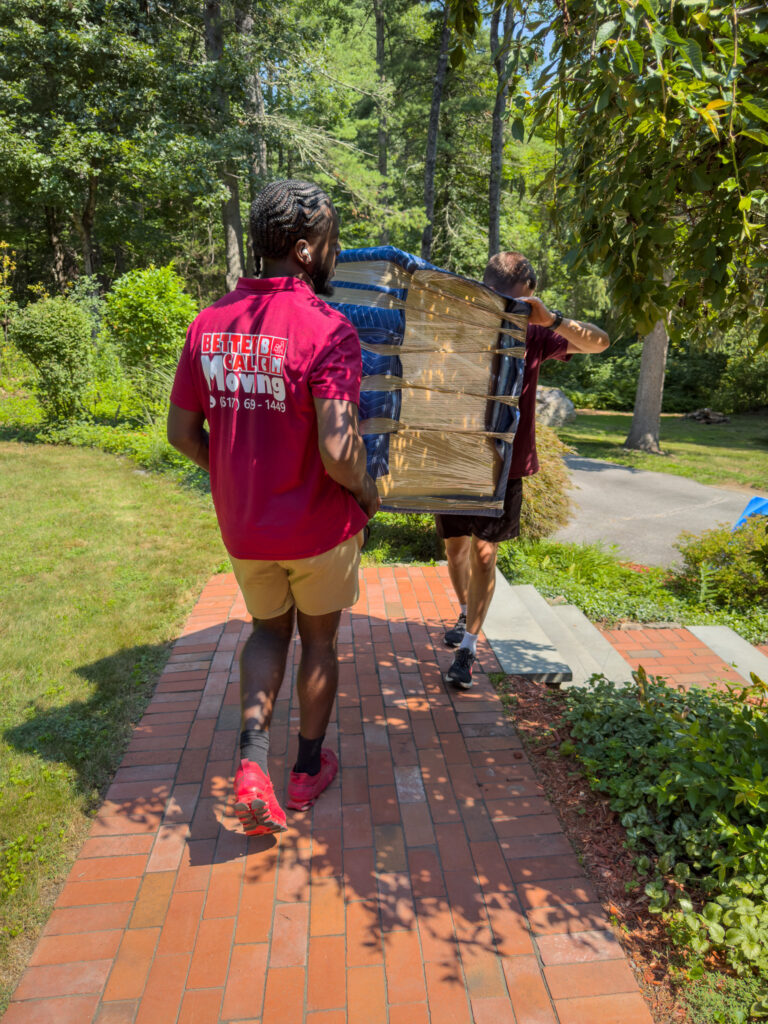
Planning a relocation is exciting, but figuring out how much help you’ll actually need can get complicated fast. One of the first questions customers ask us is: “How many movers should I hire?”
It’s a fair question, but there’s no one-size-fits-all answer. The right crew size depends on far more than the number of bedrooms in your home. The amount and type of furniture, the number of boxes, stairs, elevators, parking conditions, walking distance, overall job complexity, and your budget all play a role.
Choosing the right crew size affects how long the job takes, how efficiently the team can work, and how much you ultimately spend. Hire too few people and you risk a longer, more exhausting day; hire more than you need and you may pay for labor you didn’t have to use.
The goal is balance: a team large enough to get the job done efficiently, without paying for more than the work requires.
Why Crew Size Matters
Customers often focus on the hourly rate alone when deciding how many people to hire. Fewer movers may look cheaper on paper, but the total time needed to finish the job matters just as much.
A smaller team typically takes longer to transport furniture, load boxes, protect belongings, and organize items in the truck. A larger team can split these tasks and keep several parts of the job moving at once.
When you’re billed by the hour, the goal isn’t to book the smallest crew available — it’s to balance team size, efficiency, and the scope of work.
What to Consider Before Choosing Your Crew Size
When customers reach out, we look at more than the number of bedrooms. Two homes with the same layout can require different amounts of time and labor, depending on what’s inside and how easy the property is to access.
Here’s what we factor in when recommending a crew size:
- Volume and Quantity of Belongings
We look at how much furniture, how many boxes, and what else needs to go. A few items call for a small team; a home packed with furniture, storage, garage items, and full closets calls for more hands. - Size, Weight, and Type of Items
Large sectionals, refrigerators, oversized wardrobes, pianos, safes, and pool tables can all demand extra time, additional staff, or specialized equipment. Letting us know about these pieces ahead of time helps us plan and prepare the right crew. - Packing and Preparation
If your boxes are already packed, sealed, and labeled, the crew can focus purely on loading and transport. If you need packing help or furniture disassembly, plan on additional time and staff. - Property Layout and Accessibility
Layout matters. Carrying furniture down three flights of stairs takes far longer than moving the same items out of a ground-floor unit. A narrow staircase, a small elevator, or a truck that has to park well away from the building can all add time. These details help us size the team correctly. - Stairs, Elevators, and Parking
Let us know about stairs and elevators at both ends of the job. Elevator reservations, restricted access, multiple floors, and parking limitations can all extend the timeline — sharing these details in advance helps us avoid unnecessary delays. - Your Largest and Heaviest Pieces
Tell us about your biggest, heaviest furniture before the day arrives. That information helps us determine crew size and the equipment needed to handle it safely.
Why a Bigger Crew Can Sometimes Cost Less
It’s natural to assume that fewer people means a cheaper bill. A smaller team usually has a lower hourly rate, but the job can take much longer — so look at total hours, not just the rate.
Take a two-bedroom apartment in Boston with several large furniture pieces and a flight of stairs. With two people, the job might take 7–8 hours. Add a third, and the crew can divide tasks more effectively, potentially finishing in 5–6 hours.
The hourly rate is higher with three people, but the shorter timeline can offset some or all of the added labor cost. An extra set of hands also keeps the workflow steady, especially on stairs or through tight, limited-access spaces.
The most affordable crew isn’t always the smallest one. The right size gets the job done efficiently while keeping your total cost in check.
When You Might Need More Than Three Movers
For larger residential jobs, a team of more than three can help once there’s a lot of furniture and boxes to handle. A multi-bedroom home with a garage, outdoor furniture, heavy or fragile pieces, several flights of stairs, or a long carry to the truck often calls for extra hands. With more people on site, different parts of the job move forward at once, keeping the pace steady and the timeline shorter.
Commercial and office relocations often need a larger team too, especially when there’s a lot of equipment, furniture, filing cabinets, or electronics to relocate within a tight window. Businesses want minimal disruption to daily operations, so scheduling the job after hours or over a weekend often matters. A larger, well-organized team can complete the relocation within that window and get operations back to normal as quickly as possible.
At Better Call Moving, we operate seven days a week, so you can schedule around whatever fits your personal or business needs.
Quick Guide
The table below is a general reference for planning — every job has its own requirements, so treat these numbers as a starting point.
| Type of Move | Suggested Crew | Approx. Labor Time* |
|---|---|---|
| 1-Bedroom Apartment — Easy Access | 2 movers | 3–5 hours |
| 1-Bedroom Apartment — Stairs or Limited Access | 3 movers | 3–5 hours |
| 2-Bedroom Apartment / Small Home | 3–4 movers | 4–6 hours |
| 3-Bedroom Home | 4–5 movers | 6–8 hours |
| 4-Bedroom Home | 5+ movers | 8–10+ hours |
| Large Home / Complex Residential Move | 5+ movers | 10+ hours |
| Small Office / Commercial Space | 3–4 movers | 3–5 hours |
| Medium Office / Commercial Space | 4–6 movers | 5–8 hours |
| Large Office / Complex Commercial Move | 6+ movers | 8+ hours |
*Estimated labor time only; actual duration depends on the factors above.